
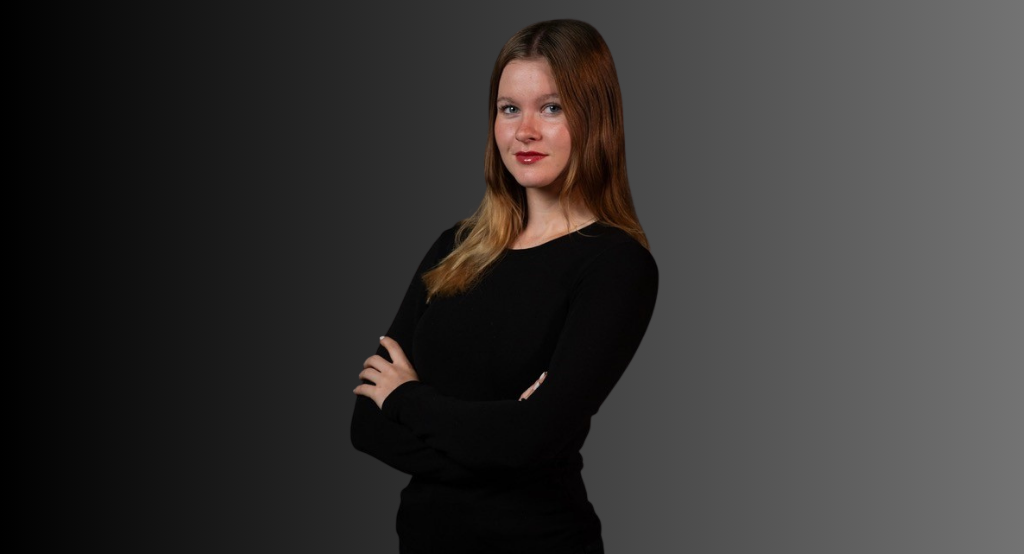
Nina Wojtczak, U.S. college student-athlete
My name is Nina Olga Wojtczak, I am 21 years old and I moved to the United States to complete my four years of college as a student-athlete. I am majoring in Political Science, with two minors in Global & International Studies, and Human Resources Management. Outside of the classroom, I am also part of the Indiana University Indianapolis women’s golf team.
Moving to the United States to study was both exciting and intimidating. When I first arrived, everything felt bigger, I noticed wide roads, enormous grocery stores and large college campuses, including my own at Indiana University in Indianapolis. Having lived in several countries previously, I believed I was prepared for cultural differences. However, living and studying in the U.S. turned out to be a very particular experience and more complex experience than expected.
One of my first challenges, was adapting to the American university system. Classes are very interactive, putting a strong focus on participation, and frequent research projects, rather than just relying on final exams. I value how the system encourages critical thinking and regular engagement. Professors are very approachable, most offer office hours, which play an important role in building academic relationships. Still, adjusting takes a little bit of time, as students are expected to speak up, get out of their comfort zone and ask questions. Nevertheless, the university itself, opens many doors to be engaged throughout the campus community and more. I personally have an opportunity to be on the executive board of my department, as well as I am part of the Chancellor’s Student Advisory Board, which helps the Chancellor and staff make improvements on campus.
As a student-athlete, daily life feels a little different too. I spend most of my time studying, working, practicing and working out, which requires a lot of discipline and good time management. It can be demanding but it teaches me resilience and accountability. The U.S. offers much larger and improved practice facilities for all sports teams, which is a major difference comparing to Europe. Nevertheless, adapting to an American team isn’t automatic. Differences in team culture, communication styles, and expectations mean that integration does not happen instantly, especially for international student athletes.
Everyday life in the United States feels entirely different from the one in European countries. Distances between places are much larger and having a car feels essential. Speaking from experience, living in a city without one can be challenging. At the same time, campus life creates a smaller community, where classes, dining calls, libraries, sports facilities, etc. are located in one area, although, the campus is still spread out on 217 hectares (536 acres).
Americans are open and friendly, however relations with people tend to develop differently than in any place in Europe. Small talk is very present in everyday life, with classmates, professors, people in the store, or even sometimes strangers, but it doesn’t always translate into deeper or lasting connections. Conversations can feel polite and positive, yet remain superficial, which can be challenging when you are looking for genuine friendships. They are often centered around a specific activity, class, sport and it is less likely for that friendship to extend beyond those settings. Over time, I learned that openness in American culture doesn’t necessarily mean closeness. As an international student, homesickness can be a big topic as well. Although the U. S. can be diverse, meaningful connections often come more easily with other international students. It highlights how isolating life in the U. S. can feel when cultural norms, communication styles and social expectations can be different from what we can be used to back at home.
Health care was a major cultural shock. The system is complex, expensive and very different from what I was used to in Europe. It can become quickly overwhelming to manage and understand how insurance, co-pay and what is and what isn’t covered work, especially that every type of insurance can be different. On the other hand, healthcare is on a high level, even higher in Indianapolis where one of the top medical schools in the nation is located.
As I am taking a redshirt year, which is a year off from golf competition, I put a stronger focus on academics. After spending two years and a half in Indianapolis, I will be moving for a full-time internship for one semester to Washington DC, to gain hands-on experience in my field of study. I am looking forward to this opportunity, as it will allow me to discover life in a different city, while gaining valuable professional experience.
Living in the United States teaches me independence, adaptability and confidence. I constantly learn how to advocate for myself, step outside my comfort zone and adapt to new environments. Despite the challenges, studying in the United States is a unique experience academically, personally and culturally.
Disclaimer: The views and opinions expressed are those of the authors and do not necessarily reflect an official policy or position of AmCham.lu. Any content provided by our interviewees are of their opinion, and are presented in their own words.